
Chicago Chauffeur Safety: Why State Rules Don’t Tell the Whole Story
By NoirFleet Team ·
A licensed chauffeur service that centralizes background checks, recurring vehicle inspections, and staffed dispatch is the more predictable choice for riders who want verified oversight. Public data comparing incident rates across ride types is limited and mixed, so structural controls are a sturdier basis for your decision than headline statistics. Below, we outline what to check and how our own service lines up with those criteria.
TL;DR:
- GAO found that 45 states and Washington, D.C., require criminal checks for app drivers, compared with statewide requirements in 11 states for taxi drivers.
- Incident comparisons are unreliable because reporting varies; crash studies find fewer alcohol involved crashes in some cities, while overall fatality effects vary.
- Ask who conducts and renews background checks, what they cover, and whether vehicle inspections are documented and recurring, since requirements vary by location.
- Before entering, match the driver’s name, photo, and license plate to your booking details, then share trip information with someone you trust.
- For airport trips, ask about flight tracking and pickup plans; late night riders should confirm live dispatch, while families should arrange car seats ahead.
Table of Contents
- How do driver background checks differ by ride type?
- What should you know about vehicle inspections?
- What do incident and crash statistics actually tell us?
- Which rider safety features can you use right now?
- How do you choose a safer ride for high-risk trips?
- Why does a licensed chauffeur service match these safety criteria?
- How do regulators oversee app-based rides and taxis differently?
- What insurance protects you as a passenger?
- What training and certification should drivers have?
- What happens after something goes wrong?
- Does surge pricing affect safety?
- A note on how we think about safety
- Book a predictable, safety-focused chauffeur in Chicago
- FAQ
- Sources
How do driver background checks differ by ride type?
The U.S. Government Accountability Office found that 45 states and Washington, D.C., require criminal background checks for prospective app-based drivers, while only 11 states have statewide criminal background check requirements for traditional taxi drivers. GAO found that the scope of checks and who is responsible for them vary by state and locality.
What that means for you:
Ask providers whether they run checks even where they are not required by law. Ask what a background check covers, since requirements and responsibility vary by state and locality.
- Who performs the check, a company or a local licensing office, varies by place.
- A service that verifies checks centrally and keeps records gives you something concrete to ask about.
Before you book anything, ask what the check covers, who conducts it, and how often it is renewed. A clear answer is a good sign. A vague one tells you something too.
What should you know about vehicle inspections?
Ask whether the service can document its vehicle inspections. Inspection practices can vary, so ask how the provider checks its vehicles. Ask whether vehicle inspections are documented and how potential problems are addressed.
You can spot-check a car in seconds:
- Look for a current inspection or licensing decal where your city requires one.
- Check that the vehicle is clean and roadworthy, with no visible body damage.
- Confirm the headlights, brake lights, and turn signals work.
- Make sure every seat belt in your row latches properly.
Pro Tip: Walk around the car before you get in. Checking the tires, lights, and decals can tell you more than any star rating.
Our guide to limo safety checks Chicago riders should confirm goes deeper on what to look for.
What do incident and crash statistics actually tell us?
Less than the headlines suggest. The GAO reported that available data cannot fully describe the extent of assaults across app-based and taxi services, because reporting is inconsistent, definitions differ, and many incidents go unreported.
The GAO’s conclusion is blunt: nonstandardized reporting across jurisdictions and private platforms means direct comparisons between ride types are unreliable.
Academic research on crashes is just as mixed. A critical review of ride-hailing and road traffic crashes found that some studies link app-based services to fewer alcohol-involved crashes, while others find varied or no effects on overall fatalities, depending on the city and how the study was designed. A four-city time-series analysis reached a similar split: a reduction in alcohol-involved crashes in some cities but not others.
So what do you do with that? Lean less on any single incident rate and more on what you can verify: documented screening, scheduled inspections, and a real system for responding when something goes wrong.

Which rider safety features can you use right now?
Useful controls can be quick to check. A GAO survey of 304 passengers found that over 95 percent of those asked about pretrip in-app safety features were aware of and used them in the past year, and riders ranked the license plate number and the driver’s name and picture as very important to their safety.
Run through this sequence on any ride:
- Match the driver’s name and photo to your booking confirmation.
- Check the license plate and vehicle description before you open the door.
- Share your trip details and arrival time with someone you trust.
- Sit in the back seat and keep your belongings close.
- Know where the emergency button or the dispatch number is before the car moves.
Pro Tip: Confirm the driver’s identity against your booking details before getting in.
Physical measures, such as visible licensing decals or partitions where a vehicle has them, are also worth noticing.
How do you choose a safer ride for high-risk trips?
Airport runs, late nights, and group outings carry the most room for things to go sideways: unfamiliar terminals, fatigue, and tight schedules. Use this checklist to screen any option:
- Background checks are confirmed, not assumed.
- Vehicle inspections are documented and recurring.
- Local licensing is visible and verifiable.
- Confirm the fare before you commit.
- Ask whether a staffed dispatcher is available.
Then work through these steps in order:
- Call or message support before booking and ask about checks and inspections.
- Confirm the pickup plan, including where the driver will meet you.
- On arrival, verify the driver’s name, the plate, and the vehicle.
- Share your trip details with a contact.
Match the choice to the situation. For airport pickups, ask whether flight tracking and a clear meeting plan are available, or consider using professional airport transfers for reliable service. For late nights, prefer a service with live dispatch. For family travel, confirm car seat availability in advance, and see our quick car seat check for busy parents. Our guide to avoiding illegal rides covers the Chicago specifics.
Why does a licensed chauffeur service match these safety criteria?
Hold our service up against the checklist above. Our chauffeurs are background-checked, insured, and City of Chicago licensed. Fares are flat and confirmed upfront, so there is no surge and no surprise. Dispatch is staffed by real people 24/7, and we track your flight in real time. For events, a dedicated coordinator manages the details.
The safety advantage is predictability, which matters most for airport and corporate travel. Because incident data across the industry is limited, we think the sensible approach is to pick a service whose processes you can verify, and to ask us to show you ours.
How do regulators oversee app-based rides and taxis differently?
Oversight comes from different places. As the GAO’s findings above show, requirements for app-based drivers tend to be set at the state level, while taxi rules often sit with cities and counties. That produces a patchwork. Two taxi drivers in neighboring towns may be held to quite different standards, and an app-based driver’s checks may be run by the company under a state framework.

For you, the practical point is simple: regulation tells you the minimum, not the quality. A rule can require a check without specifying its depth, and a license can exist without recurring vehicle review. Ask which body licenses the service, whether it can show you its current credentials, and how complaints are handled.
Licensed professional chauffeur services in a city like Chicago operate under municipal licensing, which puts the oversight in one visible place. We hold City of Chicago licensing, and we are glad to answer questions about it before you book. Whatever you choose, treat compliance as something you confirm rather than assume. A provider who welcomes the question is usually one worth riding with.
What insurance protects you as a passenger?
Insurance is the least visible part of a ride and one of the most important. Coverage can differ depending on the type of service, whether the vehicle is carrying a passenger at that moment, and the rules set by the city or state. Many riders never think to ask until something has already happened.
Before you ride, find out three things: whether the vehicle is insured for commercial passenger transport, what coverage applies to you as a passenger if there is a collision, and who to contact to start a claim. Ask the provider what insurance applies to paid passenger service.
Our chauffeurs are insured, and our vehicles are operated as a professional passenger service. If you are booking for a corporate team or a large group, ask for confirmation of coverage details when you set up the account. Specific policy terms vary, so we encourage you to read whatever your provider sends you and keep a copy of it with your trip records.
What training and certification should drivers have?
Training is where professional service most clearly separates from casual driving. Training requirements can vary, so a license alone may not tell you what training a driver has received.
Useful questions to ask any provider: Do drivers complete defensive driving instruction? Are they trained in passenger assistance and safe loading? Is there ongoing review, or is training a one-time event?
Our chauffeurs provide professional service and coordinated arrivals. They are also background-checked and City of Chicago licensed before they carry a passenger. We don’t treat a license as the finish line. We treat it as the minimum a chauffeur must clear before service even begins, and we expect riders to ask us what sits on top of it.
What happens after something goes wrong?
Response systems matter as much as prevention. If a ride goes badly, you want a human on the other end quickly, a clear record of the trip, and a defined process for follow-up.
Look for these before you need them:
- A phone line staffed by real people, not only an in-app form.
- A trip record showing the driver, the vehicle, and the route.
- A stated process for reporting concerns and getting a response.
- A way to reach emergency services first, then the provider.
In an emergency, seek immediate help from emergency services.
Our dispatch is staffed around the clock, including holidays, so a person answers when you call. Because we track flights and coordinate arrivals, we can help when a rider reaches out about a problem. Report any concern to us directly, and we will treat it seriously from the first call.
Does surge pricing affect safety?
Variable pricing changes behavior on both sides of the ride. Variable pricing may affect how drivers and riders make decisions, but its effects on safety are not established here. Unexpected fare changes can make it harder for riders to compare options calmly.
The GAO findings above show how much safety depends on checks that riders do or skip. Taking time to verify a provider’s safety practices can help you make an informed choice.
That is why we confirm flat fares upfront, with no surge and no blackout dates. You know the cost before you commit, so there is no incentive to hurry past verifying your driver, and no reason for a chauffeur to cut corners to chase a premium. Our guide to flat rate car service explains how it works.
A note on how we think about safety
Safety, for us, is a set of habits rather than a slogan. Every chauffeur is background-checked and City of Chicago licensed. Fares are flat. Dispatch answers 24/7. We track your flight to help coordinate your arrival. When you book with us, expect punctuality, professional conduct, and a coordinated arrival from start to finish. If you ever want to know how something works, ask us. We would rather answer a hard question than have you guess. When you’re ready, the booking page is one click away.
Book a predictable, safety-focused chauffeur in Chicago
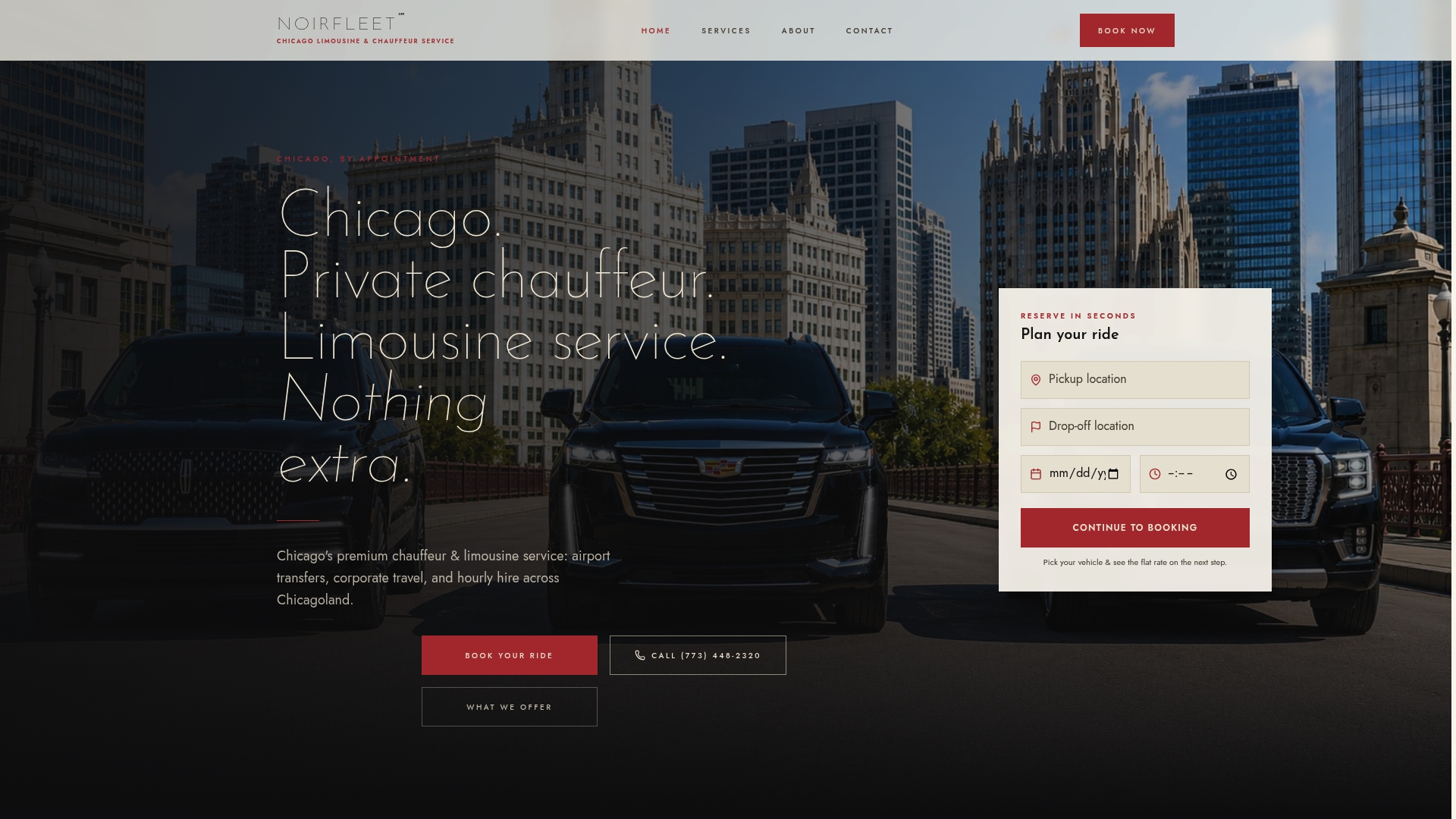
If safety is why you are comparing options, we built our service around the controls covered here. We handle airport transfers at O’Hare and Midway, corporate travel, hourly hire, weddings and other events, and a luxury party bus, across Chicago and its suburbs. Our chauffeurs are background-checked, insured, and City of Chicago licensed. Fares are flat and confirmed upfront, dispatch is staffed 24/7, and we track your flight in real time. Noirfleet, or see all our services.
FAQ
Is one ride type clearly safer than the other?
No clear winner emerges from public data. Reporting is inconsistent across providers and jurisdictions, so direct incident comparisons are unreliable. Judge safety by what you can verify: background checks, vehicle inspections, licensing, and dispatch support.
How can you stay safe in any ride?
Match the driver’s name, photo, and license plate before you get in, and sit in the back seat. Share your trip details with a contact and know how to reach emergency services. These steps cost almost nothing and work with any provider.
Do background checks look the same everywhere?
No. The GAO found that requirements and responsibility for checks vary by state and locality. Ask any provider what its checks cover, who runs them, and how often they are renewed.
What should you ask before booking a late-night or airport ride?
Ask whether a real person staffs dispatch, how pickups are coordinated, and whether flight tracking is included. Confirm that the fare is fixed before you commit.
Sources
- Ridesharing and Taxi Safety: Information on Background Checks and Safety Features Reissued with revisions on Oct. 25, 2024 | U.S. GAO
- Ride-Hailing and Road Traffic Crashes: A Critical Review