
3 Limo Safety Checks Chicago Riders Must Confirm for Compliance
By NoirFleet Team ·
A safe limousine has functioning seat belts at every designated seating position, marked emergency exits, a mounted fire extinguisher, a documented inspection history, and a chauffeur holding a valid public license. Federal oversight from the FMCSA and city licensing rules form the backbone that keeps these features in place, not the vehicle’s paint job or interior lighting.
TL;DR:
- Confirm the limousine has functioning seat belts at every seat you plan to occupy and verify that emergency exits are clearly marked and operable.
- Ensure the vehicle has a current, mounted fire extinguisher and has been inspected within the last 90 days, with records easily available.
- Check that the operator holds proper licensing, especially if traveling across state lines, and that the vehicle has no open safety recalls by running a VIN check.
- Ask the operator about their inspection routine, background checks for chauffeurs, and whether they track flights to avoid last-minute vehicle swaps.
- Decline any vehicle missing seats belts, with open recalls, or refused inspection disclosures, and verify these points before booking or entering the vehicle.
Table of Contents
- Core Limo Safety Features Explained
- Inspection, Maintenance and Recall Checks Riders Should Know About
- Licensing, Insurance and Regulatory Responsibilities
- What to Confirm Before You Book a Ride
- Publisher Perspective: How a Premium Chauffeur Service Approaches Safety
- Verdict and Next Steps Before You Ride
- NoirFleet: A Safety-First Chauffeur Option
- Sources
- FAQ
Core Limo Safety Features Explained
Seat belts are widely regarded as the most important safety feature in passenger vehicles, including limousines. Designated seating positions, such as forward-facing or side-facing seats equipped with lap and shoulder belts, should be used every time, even on short rides. Auxiliary bench seating that lacks belts should raise a question before you sit down. NHTSA research on high-capacity passenger vehicles found that seat belts can cut rollover fatality risk sharply, a finding that applies just as much to a stretched sedan as to a motorcoach.

Emergency exits matter more in a limousine than in a standard car because stretched vehicles have longer cabins and fewer natural escape points. Push-out windows and emergency doors should carry visible signage and open with a force a passenger can manage without tools. Fire extinguishers and basic first-aid kits belong in an accessible, mounted location, not buried under luggage.
A few structural details separate a well-built limo from a risky one:
- Seat belts installed and functional at every seating position likely to be used
- Push-out windows or emergency doors clearly marked and operable by hand
- A mounted, current fire extinguisher within reach of passengers
- Interior lighting and door mechanisms that work reliably in the dark
- Structural reinforcement at the stretch point, since a poorly executed aftermarket stretch can weaken the frame and compromise crash protection
Pro Tip: Before you sit down, glance at the seat belt anchor points. If a seating row has no visible belt, treat that row as unsafe for a full-speed ride.
Inspection, Maintenance and Recall Checks Riders Should Know About
Every motor carrier of passengers is required to follow a maintenance cycle set out in FMCSA Part 396, and that cycle is the practical difference between a vehicle that gets caught early and one that fails on the road. Three checks matter most to a rider:
- Daily post-trip inspection reports, written after each day of service, flag defects in brakes, lights, tires, and emergency exits before the vehicle runs again.
- Periodic inspections, required at least once every 12 months under Part 396, cover the vehicle’s full mechanical and safety-critical systems, with records kept for 14 months.
- A free VIN check at NHTSA’s recall database shows whether a specific vehicle has an open safety recall and how it should be remedied.
Push-out windows and emergency doors are required to be inspected at least every 90 days under FMCSA rules, a detail that matters because emergency egress hardware degrades faster than most passengers assume.
An unpaid recall is not a paperwork issue. It means a known defect, sometimes involving brakes, airbags, or fuel systems, has not been fixed. Ask an operator for a summary of its inspection cadence, and treat a vague or evasive answer as a warning sign rather than a formality.

Licensing, Insurance and Regulatory Responsibilities
Federal and municipal rules layer on top of each other to define who can legally operate a limousine and what coverage has to be in place. Under FMCSA licensing and insurance guidance, for-hire carriers operating across state lines must carry insurance amounts that depend on their vehicle seating capacity, along with proper operating authority.
A handful of other thresholds shape how a limousine is regulated:
- A vehicle becomes a commercial motor vehicle when it’s designed for 9 or more passengers for compensation or has a gross vehicle weight rating above 10,000 pounds
- CDL requirements attach once passenger capacity reaches 16 or more, along with drug and alcohol testing rules for the driver
- Chicago requires a city-issued public chauffeur license and holds public passenger vehicles to Municipal Code Chapter 9-112 equipment standards under BACP rules
- Local inspection facilities check vehicles for fitness before licensing or renewal, separate from federal annual inspections
These rules exist because a rider who is hurt in an improperly insured or unlicensed vehicle has far less recourse than one riding with a properly regulated carrier. Insurance minimums and licensing aren’t red tape, they’re the mechanism that makes a claim payable after something goes wrong.
What to Confirm Before You Book a Ride
A short pre-booking conversation can tell you more about a limousine company’s safety culture than any glossy photo. Ask directly about the points that matter:
- Whether chauffeurs undergo background checks and hold a valid city public chauffeur license
- Whether the operator can summarize its inspection cadence or show proof of a recent periodic inspection
- Whether every seating position you’ll actually use has a working seat belt
- Whether the vehicle has any open recalls, which you can verify yourself through a VIN search
A few red flags are worth walking away from: an operator who refuses to discuss inspection records, a vehicle with a known open recall, or missing belts at seats you’re expected to fill.
Pro Tip: For airport runs, ask whether the operator tracks your flight in real time. A service without flight tracking is more likely to substitute a vehicle at the last minute when a flight is delayed, which raises the odds of an unfamiliar or unnetted car showing up.
Publisher Perspective: How a Premium Chauffeur Service Approaches Safety
A premium chauffeur service’s approach to safety starts before a chauffeur ever gets behind the wheel. Chauffeurs are background-checked, insured, and hold a valid public chauffeur license, and vehicles run on a scheduled inspection routine rather than a reactive one. Dispatch operates 24/7, so a rider is never left waiting on an unverified substitute vehicle, and flat-rate pricing with no surge means there’s no financial incentive to rush a trip or skip a check.
Real-time flight tracking keeps airport transfers aligned with actual arrival times, which reduces the pressure that leads to corner-cutting on last-minute swaps.
Riders shouldn’t have to guess whether the car they’re stepping into has been inspected this month or this year. That information should be available the moment they ask.
Verdict and Next Steps Before You Ride
Run a VIN recall check, confirm seat belts at your seating position, ask for the operator’s inspection cadence, and verify the chauffeur’s city license before you get in. Decline any vehicle that fails one of these checks, no matter how polished it looks. Regulated, routinely inspected fleets staffed by vetted chauffeurs remain the most reliable way to lower your risk on any limousine ride.
— Adam
NoirFleet: A Safety-First Chauffeur Option
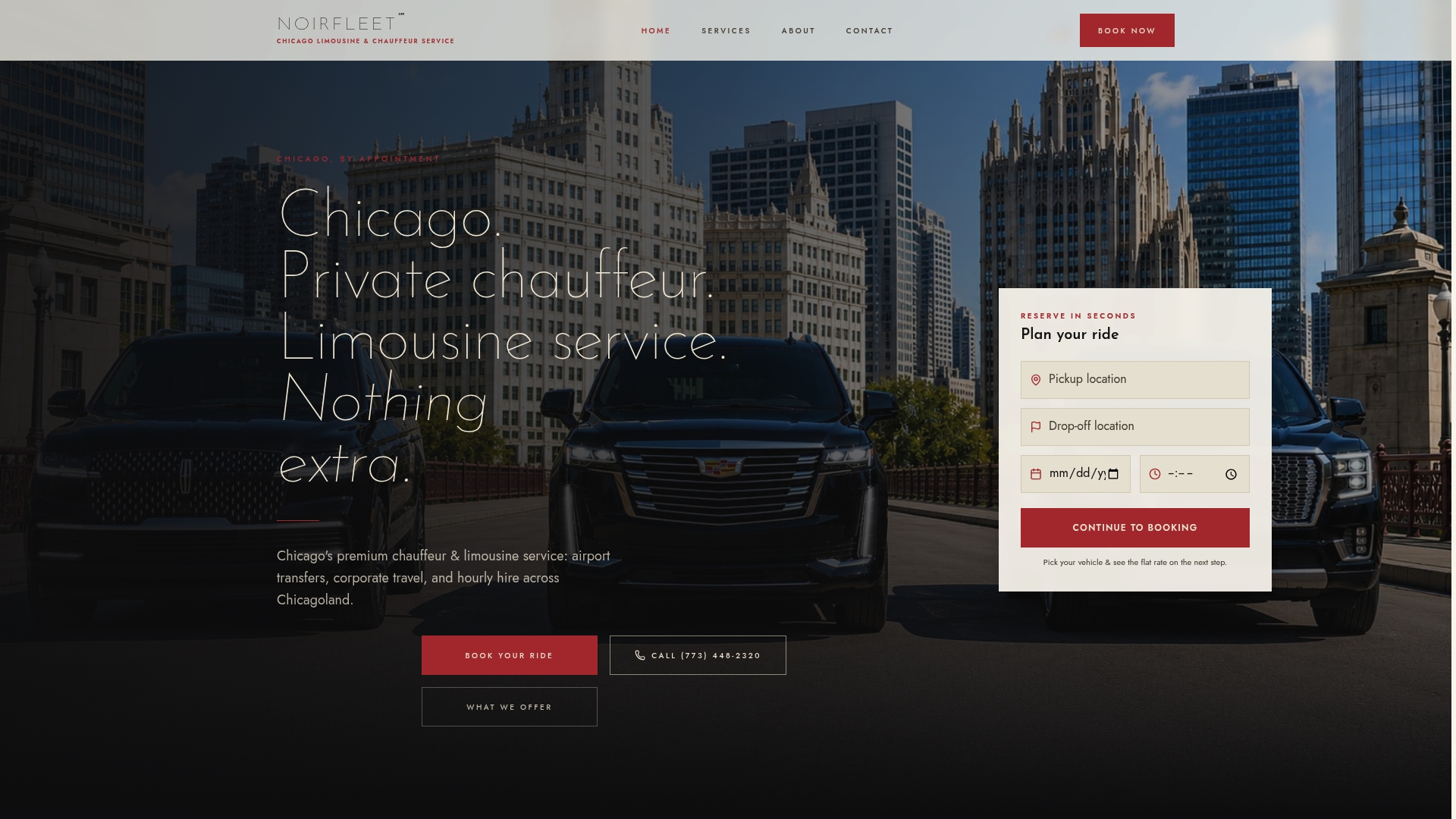
Booking a chauffeur shouldn’t mean gambling on whether the vehicle was inspected this month. NoirFleet runs background-checked, City of Chicago licensed chauffeurs, keeps vehicles on a scheduled inspection routine, and staffs dispatch 24/7 so a verified car is always available, even for last-minute airport runs.
- Flat-rate pricing confirmed upfront, with no surge pricing or blackout dates
- Real-time flight tracking for O’Hare and Midway transfers
- Dedicated event coordinators for weddings, galas, and corporate travel
- Hourly hire with unlimited stops for flexible scheduling
Compare that against generic airport shuttle operators or entry-level car services with no published inspection routine, and the gap in accountability becomes the deciding factor. Explore NoirFleet’s services or book a ride at noirfleet.us to travel with a chauffeur you can verify before you ride.
Sources
- Inspection, Repair, and Maintenance for Motor Carriers of Passengers - Part 396 | FMCSA
- City of Chicago public passenger vehicle rules and licensing
FAQ
Why is it legal to drink in a limo but not a regular car?
Open container laws generally exempt for-hire passenger vehicles like limousines because a licensed chauffeur, not a passenger, controls the vehicle. The exemption applies to the passenger compartment specifically and varies by state and city, so it’s worth checking local rules before assuming they apply.
What are the most important car safety features to check?
Seat belts at every seating position, working airbags, functioning brakes and lights, and clear emergency exits are the features that matter most in any passenger vehicle. In a limousine, add a mounted fire extinguisher and marked push-out windows or emergency doors to that list.
Why don’t people ride in limos as often anymore?
Ride preferences have shifted toward on-demand booking convenience and cost, but limousines remain the stronger choice for events, corporate travel, and airport transfers where flat pricing, dedicated coordination, and licensed chauffeurs matter more than the shortest possible wait time.
What are the most important safety features to check before riding?
The essentials are seat belts, emergency exits with clear signage, a fire extinguisher, an up-to-date inspection record, and a licensed chauffeur. Checking a vehicle’s VIN for open recalls adds another layer of confirmation before you get in.
How can I verify a limo company’s safety compliance?
Ask the operator for its inspection cadence, confirm the chauffeur holds a valid city public chauffeur license, and run the vehicle’s VIN through NHTSA’s recall database. A company with nothing to hide will answer these questions directly.