
Lock a Predictable All In Fare With Flat Rate Car Service in Chicago
By NoirFleet Team ·
A flat-rate car service charges one agreed amount for a defined trip, giving predictable cost for point-to-point transfers, provided the provider defines what the flat fee covers. It works best for airport runs and scheduled transfers with a known origin and destination. When your itinerary involves multiple unscheduled stops or open-ended waiting, hourly billing usually serves you better.
TL;DR:
- Flat-rate pricing is most reliable when trip details such as exact addresses, time window, passenger count, and stops are confirmed upfront.
- Hidden add-on fees like tolls, wait-time charges, or extra stops can significantly increase the total cost if not disclosed before booking.
- For direct airport transfers or scheduled point-to-point trips, flat rates provide budget certainty, while hourly billing suits open-ended or multiple-stop itineraries.
- Real-time flight tracking and 24/7 dispatch are essential operational factors that help maintain the reliability of flat-rate services.
- Short, direct rides with no luggage or stops may occasionally be cheaper with metered billing, but flat rates generally eliminate uncertainty.
Table of Contents
- What Flat-Rate Pricing Covers: Inclusions, Exclusions, and Trip Scope
- How Flat-Rate Pricing Compares with Metered, Hourly, and Surge Models
- When Flat-Rate Makes Sense: Use Cases and Exceptions
- Hidden Costs and How to Spot Junk Fees in Flat-Rate Quotes
- Booking Checklist: What to Confirm Before Accepting a Flat Fare
- How a Licensed Flat-Rate Chauffeur Service Operates in Practice
- A Chauffeur’s Perspective on Choosing the Right Billing Model
- Book a Flat-Rate Chicago Chauffeur with NoirFleet
- FAQ
- Sources
What Flat-Rate Pricing Covers: Inclusions, Exclusions, and Trip Scope
A flat rate is a single price set before the ride begins, tied to a specific trip rather than to the minutes or miles a meter racks up. The quote is built around a defined scope: pickup location, drop-off address, a pickup time window, the number of passengers, and the amount of luggage. Change any of those inputs and the quoted price can change too, which is why a provider needs to lock in the details before confirming a number.
A flat-rate car service charges one agreed amount for a defined trip instead of calculating the final fare continuously by mileage, time, or a meter, and this gives budget certainty only if the provider clearly states what is included and excluded, according to the Consumer Financial Protection Bureau. That last condition matters more than the price itself. Two quotes with the same dollar figure can represent very different value if one bundles tolls and the other does not.
Typical scope points worth nailing down:
- Trip definition: exact pickup and drop-off addresses, not just neighborhoods or airport codes.
- Time window: how long the chauffeur will wait at pickup before the clock or a fee kicks in.
- Passenger and luggage count: more bags or riders than quoted can trigger a vehicle change or added charge.
- Stops: whether the fare covers one stop or allows a brief detour without extra cost.
- Inclusions: tolls, standard parking, and meet-and-greet service, when the provider bundles them into the fare.
What usually falls outside a basic flat quote includes extended wait time beyond the agreed window, additional stops not disclosed upfront, and special requests like extra vehicles or last-minute itinerary changes. An explicit scope statement, ideally confirmed electronically before the ride, is what turns a flat number into a reliable one rather than a starting point for later additions.
How Flat-Rate Pricing Compares with Metered, Hourly, and Surge Models
Metered billing calculates your fare continuously based on distance traveled and time elapsed, often with separate per-mile and per-minute rates. The risk is straightforward: traffic, detours, or a slow pickup all add to the final number, and you will not know the total until the trip ends. For a known, direct route this model can occasionally undercut a flat rate, but it removes the certainty that makes budgeting easy.
Hourly or as-directed billing charges a rate for a block of chauffeur time rather than for a single trip. This model fits open itineraries: a wedding party making several stops, a corporate guest attending meetings across a city, or an evening with a flexible schedule. You pay for the chauffeur’s time regardless of how many miles you cover, which makes hourly hire the better choice when your plans are not yet fixed.
Surge or dynamic pricing raises the price in real time based on demand, weather, or local events. It is common in on-demand, app-dispatched transportation, and it means the same trip can cost noticeably different amounts depending on when you book. A true flat-rate model sidesteps this entirely because the fare is fixed in advance and does not move with demand spikes, holidays, or weather.
Quick rules of thumb by trip type:
- Airport transfer with a known flight and address: flat rate, since the trip boundaries are fixed and predictable.
- Multi-stop event day or open-ended itinerary: hourly hire, since you are paying for flexibility rather than a single route.
- Last-minute booking during a high-demand period: confirm whether the model uses dynamic pricing, since this is exactly when flat-rate billing protects you.
- Short, direct ride with no luggage or stops: either model can work, but a flat quote still removes the guesswork.
The common thread across all three alternatives is uncertainty at the point of booking. Metered billing is uncertain because the clock runs until you arrive. Surge pricing is uncertain because the rate itself can shift. Flat-rate pricing removes both variables by fixing the number before the chauffeur ever starts the engine, as long as the scope behind that number is clear.
When Flat-Rate Makes Sense: Use Cases and Exceptions
Point-to-point transfers are the clearest case for flat-rate pricing. An airport run from a home address to a terminal, or a transfer between two fixed locations, has a defined start and end, which is exactly the structure flat pricing is built for. You know the trip before it happens, so the provider can price it accurately.
Event and group transfers also favor a single flat price, particularly for weddings, galas, or corporate functions where multiple guests need the same predictable cost without each rider worrying about a running meter. A flat number simplifies budgeting for the organizer and avoids disputes over who used more drive time.
Flat-rate pricing works less well in a few specific situations:
- Open itineraries: if your day includes several stops decided on the fly, an hourly arrangement usually delivers better value than a series of separately quoted flat trips.
- Unscheduled extra stops: adding a stop mid-ride that was not part of the original quote can trigger a change fee or a renegotiated price.
- Uncertain duration errands: shopping trips, property tours, or appointments with no fixed end time are a poor match for a fixed single-trip quote.
A few scenarios deserve extra verification regardless of billing model. Private terminal pickups, meet-and-greet service inside a terminal, and multiple pickup addresses on one reservation can all affect whether the original flat quote still applies. Confirming these details before booking, rather than assuming they are included, is what keeps a flat fare flat.
Hidden Costs and How to Spot Junk Fees in Flat-Rate Quotes
The biggest threat to a flat-rate quote is not the base price, it is what gets added afterward. Common add-ons in ground transportation include tolls, extended wait-time charges, gratuity, child seats, extra stops, and cancellation fees. None of these are unreasonable on their own, but a quote that omits them upfront and adds them later defeats the purpose of flat pricing.
CFPB research shows higher price complexity leads consumers to pay more, according to the Consumer Financial Protection Bureau, because splitting a price into many sub-parts makes it harder for buyers to compare and evaluate the real total cost. That finding applies directly to car service quotes: a $70 base fare with five undisclosed add-ons is not actually cheaper than an $85 all-in quote, it is just harder to evaluate at a glance.
Transparent quoting looks like a single number that already accounts for tolls, standard waiting time, and the agreed stops, confirmed before the ride rather than itemized afterward. Red-flag language includes vague terms like “starting at,” “plus applicable fees,” or wait-time policies that are not spelled out in minutes.
- Ask for the total, not the base: a quote should state the all-in number, not a starting figure with fees layered on.
- Get the wait-time policy in minutes: “reasonable wait time” is not a policy, a specific number of free minutes is.
- Confirm tolls and parking status: ask directly whether these are bundled or billed separately.
Hidden or complex add-on fees make comparison-shopping difficult, which is precisely why the CFPB has flagged junk fees as a consumer harm worth addressing across industries, ground transportation included.
Booking Checklist: What to Confirm Before Accepting a Flat Fare
Getting an accurate flat quote starts with giving the provider complete trip details, and confirming the right policies before you book protects you from surprises after the ride ends.
- Provide full trip details: airport and terminal (or exact addresses), pickup date and time, passenger count, luggage needs, and flight number if applicable.
- Ask what the fare includes: tolls, parking, and any permitted stops should be stated plainly, not assumed.
- Ask about the waiting policy: get a specific number of free wait minutes and understand when waiting becomes a billable extra.
- Ask about cancellation and refund terms: confirm the cutoff window and whether a cancellation fee applies.
- Ask about flight-tracking policy: a provider that tracks your flight can adjust pickup timing for early arrivals or delays without penalizing you.
- Check licensing and insurance: for trips in Chicago, confirm the chauffeur holds a public chauffeur license, which the city requires to operate a public passenger vehicle for hire and which also signals the provider follows airport operating rules.
- Compare quotes on full scope, not just price: line up two quotes side by side and compare every inclusion and policy, not only the headline number.
Pro Tip: Ask for your trip confirmation to state the full fare, the wait-time allowance, and the cancellation window in the same message, so there is nothing to interpret later.
Airline rules add one more wrinkle worth understanding. The Department of Transportation’s tarmac-delay rules set thresholds for how long airlines can hold passengers on the ground, but those rules govern airline obligations only, not your chauffeur’s waiting or cancellation policy. A flight delay does not automatically extend your ground transportation’s free wait time unless your provider’s own policy, paired with flight tracking, accounts for it.
How a Licensed Flat-Rate Chauffeur Service Operates in Practice
A flat rate stays reliable only when the operational pieces behind it actually function. Real-time flight tracking lets a chauffeur adjust for an early or delayed arrival without renegotiating the fare. Around-the-clock dispatch means a confirmed booking does not fall through at an odd hour. A dedicated coordinator for events keeps multiple pickups and timing changes from turning into disputed charges later.
- Confirmed flat fare before the ride, set once trip details are locked in, with no surge adjustment.
- Flight tracking that adjusts pickup timing automatically for delays or early landings.
- 24/7 dispatch, so bookings outside business hours still get confirmed.
- Dedicated event coordination for weddings, galas, and multi-vehicle bookings.
Licensing is the baseline reliability signal underneath all of this. Chauffeurs operating in Chicago hold public chauffeur licenses, and that licensing, combined with airport-specific operating protocols, is what keeps pickups at O’Hare and Midway compliant and predictable.
A Chauffeur’s Perspective on Choosing the Right Billing Model
For airport runs and scheduled events, a flat rate is the right call almost every time, since it removes the one variable most riders actually worry about: the final number. The trade-off is real. Hourly billing can occasionally cost less for a short, direct trip, but you give up certainty to chase it. Before you book, always confirm the all-in scope in your trip confirmation, not after the ride.
— Adam
Book a Flat-Rate Chicago Chauffeur with NoirFleet
We offer a service addressing the problem this guide discusses: a flat fare confirmed before you ride, with no surge pricing and no blackout dates, similar to how Halen operates as a transparent transport super-app. Our dispatch operates 24/7, we track flights in real time to avoid extra charges due to delays, and we provide a coordinator for events such as weddings and multi-stop bookings.
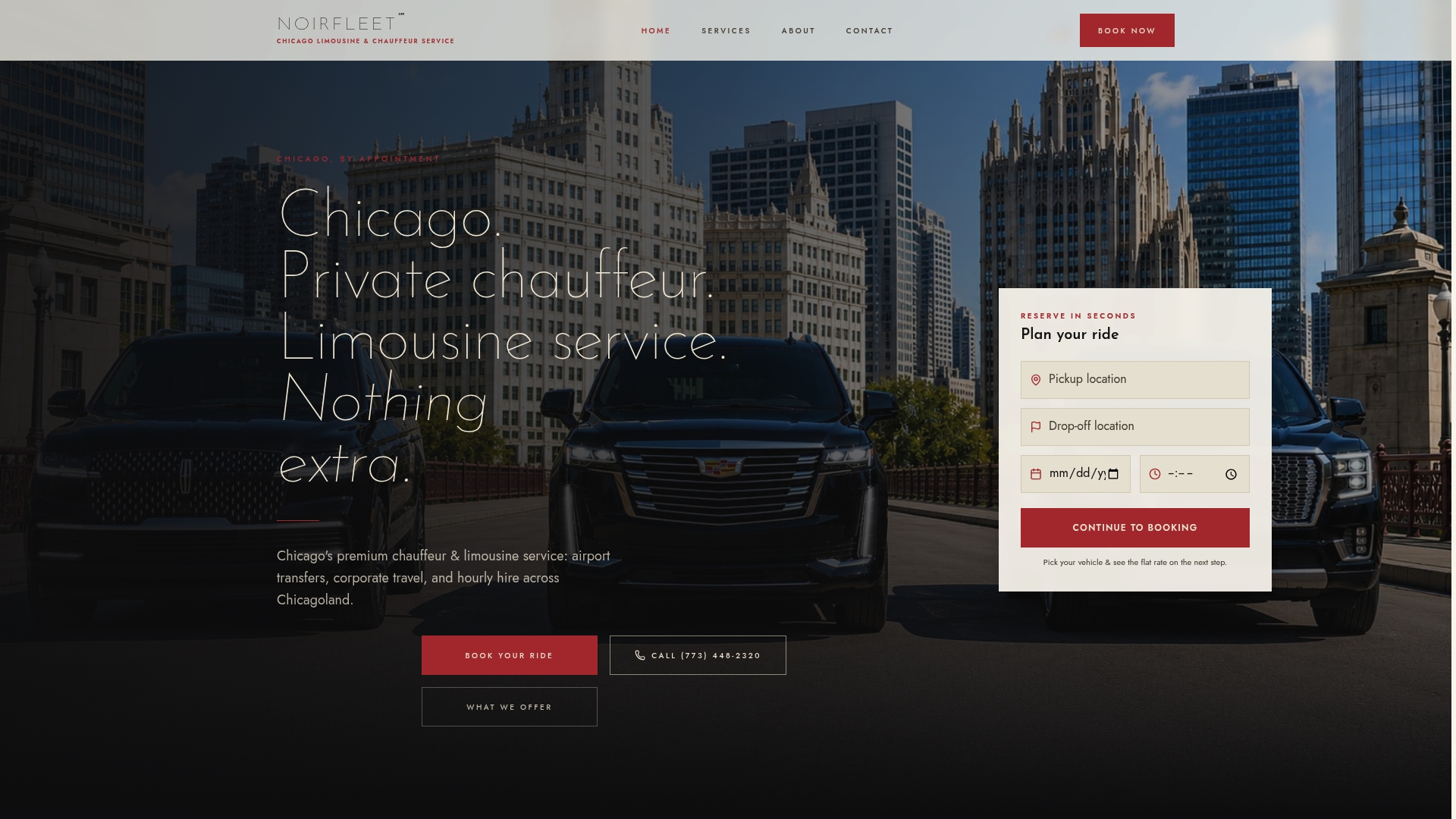
Our chauffeurs are background-checked, insured, and City of Chicago licensed, driving immaculate, late-model vehicles for airport transfers, corporate travel, hourly hire, and special occasions across Chicago and the suburbs. Browse our full services or book a ride now to get your flat fare confirmed in advance.
FAQ
What are the disadvantages of flat rate?
A flat rate can cost more than metered billing on a short, direct trip with no traffic, since the provider builds in a margin to cover route and timing uncertainty. It also offers less flexibility for open itineraries or unplanned extra stops, which is where hourly billing tends to perform better.
What is the $3,000 rule for car repairs?
This question refers to vehicle repair shop practices rather than passenger chauffeur or car service pricing, and it is not a standard covered by ground transportation providers. If you encountered this term in a repair context, check with the specific repair shop or your vehicle’s warranty documentation, since it is not a transportation industry term.
What does a flat rate mean in car service pricing?
A flat rate means one agreed price covers the full trip as defined by the pickup location, drop-off address, passenger count, and any agreed stops, set before the ride begins rather than calculated by a running meter. The reliability of that price depends entirely on how clearly the provider states what is included and excluded.
Is it worth paying for a flat-rate transfer versus metered pricing?
Flat-rate pricing is generally worth it for airport transfers and scheduled point-to-point trips, since it removes the uncertainty of traffic, detours, and wait time from your final cost. For short rides with no luggage or stops, metered pricing can occasionally be cheaper, but it trades predictability for a potentially lower number.
Sources
- The hidden cost of junk fees | Consumer Financial Protection Bureau
- City of Chicago :: Chicago Public Chauffeur Licenses
- Tarmac delays | US Department of Transportation