
4 Times to Hire a Chauffeur in Chicago: Chauffeur vs Driver, Licensing
By NoirFleet Team ·
A chauffeur is trained and licensed to deliver a full service experience, managing itineraries, luggage, and etiquette on top of the drive itself; a driver is focused mainly on getting a vehicle from point A to point B safely. That distinction determines everything from what you pay for to what you should expect on the road, and companies like Noirfleet build their entire operation around the chauffeur standard rather than basic transport.
TL;DR:
- Chauffeurs typically operate executive vehicles that are maintained to higher standards and involve formal attire and etiquette, unlike standard fleet cars used by drivers.
- Licensing for chauffeurs often includes background checks, specialized training, and city-specific permits, especially for vehicles carrying fewer than 16 passengers, while larger vehicles require a CDL with a passenger endorsement.
- Chauffeurs handle complex logistics such as flight tracking, route adjustments, and client coordination, making them suitable for weddings, corporate travel, and airport pickups with timing pressure.
- Basic point-to-point transport or shuttle trips usually suffice with a driver, as they focus on safety and efficiency without additional service layers.
- When selecting a service, verify proof of licensing, insurance, and include questions about flight delays and logistics management to ensure reliable, professional transport.
Table of Contents
- Chauffeur vs Driver: A Quick Comparison
- What Do Chauffeurs and Drivers Actually Do?
- What Training and Licensing Should You Expect?
- How Do Vehicles and Appearance Differ?
- When Should You Hire a Chauffeur Instead of a Driver?
- How Do You Choose the Right Chauffeur Service?
- What Noirfleet Sees in the Chauffeur vs Driver Debate
- Book a Professional Chauffeur With Noirfleet
- Sources
- FAQ
Chauffeur vs Driver: A Quick Comparison
The fastest way to see the gap is to line up what each role actually covers. A driver gets you moved. A chauffeur manages the whole experience around that movement.
- Duties: Drivers handle point-to-point trips or shuttle runs; chauffeurs manage itineraries, luggage, flight tracking, and client coordination.
- Booking model: Drivers are often dispatched on demand or run fixed shuttle schedules; chauffeurs are typically booked in advance for a specific trip, event, or block of hours.
- Vehicle: Drivers commonly operate shuttle vans or standard fleet cars; chauffeurs work in executive sedans, SUVs, limousines, or party buses maintained to a higher standard.
- Attire and conduct: Drivers generally follow basic dress codes; chauffeurs are trained in formal etiquette, discretion, and professional presentation.
- Training and licensing: Both may need a municipal license depending on the vehicle, but chauffeur licensing usually adds background checks and service training on top of driving qualifications.
- Service level: Drivers deliver transport; chauffeurs deliver a coordinated, white-collar travel experience.
The categories overlap in practice. A private driver hired long term for one family might pick up chauffeur-style duties over time, and a shuttle operator at a hotel might dress and behave like a chauffeur without holding that specific license. The label matters less than what the person actually does once they’re behind the wheel.
What Do Chauffeurs and Drivers Actually Do?
A chauffeur’s job rarely stops at driving. The Bureau of Labor Statistics notes that chauffeurs often function as something closer to an executive assistant on wheels, managing schedules, tracking flight arrivals, handling luggage, and adjusting routes around a client’s plans rather than a fixed pickup point. Some chauffeurs coordinate directly with event planners, arriving early to confirm timing and handle logistics before a client ever steps outside.
Drivers, by contrast, focus on safe, efficient vehicle operation. That might mean running a hotel shuttle on a set loop, handling scheduled pickups for a facility, or completing straightforward transport requests with minimal added service. Neither role is lesser, they’re built for different jobs. The confusion comes from cases in the middle: a private driver who’s been with one household for years often absorbs chauffeur-style responsibilities, like managing a rotating calendar of pickups, without ever holding a formal chauffeur license.

What Training and Licensing Should You Expect?
Licensing is where the difference between chauffeur and driver becomes legally concrete, not just a matter of service style. The Bureau of Labor Statistics points out that state and local licenses vary, often requiring clean driving records and background checks before someone can operate a taxi, limousine, or chauffeured vehicle for hire.
Chicago requires a public chauffeur license, and it’s not a rubber stamp.
Chicago’s Department of Business Affairs and Consumer Protection requires a Public Chauffeur License for anyone operating a public passenger vehicle, with mandatory background checks, approved training courses, and a two-year license term before renewal. Applicants also need a documented one-year driving history and completed training course certificates before the city will approve a license.
Vehicle size adds another layer. Under FMCSA guidance, anyone transporting 16 or more passengers must hold a Commercial Driver’s License with a passenger endorsement, which is why party buses and larger shuttles require a different qualification tier than a standard sedan or SUV.
How Do Vehicles and Appearance Differ?
Vehicle class tends to track service level pretty closely. Chauffeurs typically operate executive sedans, SUVs, stretch limousines, or party buses kept to a stricter maintenance and cleanliness standard, since the vehicle is part of the experience a client is paying for. Chicago’s livery vehicle rules require pre-arranged trips, vehicle history checks, and specific seating limits, all aimed at keeping licensed passenger vehicles up to a consistent standard.
Drivers more often work in standard fleet cars or shuttle vans, where presentation matters less than reliability. Attire follows the same pattern: chauffeurs dress and behave to formal etiquette standards because weddings, galas, and corporate travel demand it, while a driver’s dress code is usually simpler.

When Should You Hire a Chauffeur Instead of a Driver?
The right choice comes down to what’s actually at stake in the trip. A late shuttle van is an inconvenience. A late chauffeur at a wedding or a CEO’s airport pickup is a problem.
- Executive and corporate travel: Recurring business trips benefit from a chauffeur who knows the client’s preferences, tracks flight status, and adjusts for delays without being asked.
- Weddings and events: Chauffeur services built around dedicated coordination handle timing, multiple stops, and vehicle logistics that a standard driver setup isn’t built for.
- Airport transfers: Flight tracking and meet-and-greet service matter most when a delayed flight would otherwise leave a passenger stranded curbside.
- Short, simple trips: A basic point-to-point ride or scheduled shuttle is often the more practical fit when there’s no event, no VIP timing pressure, and no need for extra service.
Privacy, frequency, and how much is riding on punctuality should drive the decision more than habit or convenience.
How Do You Choose the Right Chauffeur Service?
Before booking anything, run through a short checklist. It takes five minutes and it separates a legitimate operator from someone who just owns a nice car.
- Ask for proof of licensing and insurance, not just a verbal assurance.
- Confirm the chauffeur has passed a background check, not just a driving test.
- Check the vehicle’s condition and confirm it matches what was advertised.
- Ask whether flight tracking is included for airport pickups, and how delays are handled.
- Confirm pricing is flat and locked in before the trip, not subject to change after the fact.
- Ask if dispatch is available 24/7 with a real person, not just an app queue.
- For events, ask whether a dedicated coordinator manages timing and logistics.
Pro Tip: Ask directly, “What happens if my flight is delayed two hours?” A real chauffeur service has a standard answer ready. A vague response or a shrug is your signal to keep looking.
Red flags are usually easy to spot once you know to look for them: no proof of license or insurance, vague or shifting pricing that sounds like surge pricing, and slow or inconsistent responses when you first reach out.
What Noirfleet Sees in the Chauffeur vs Driver Debate
The line between chauffeur and driver isn’t cosmetic, according to Adam of Noirfleet. It shows up in how a trip actually plays out. A chauffeur trained to executive service standards checks a flight status before it’s asked for, adjusts a route around a client’s schedule, and handles the small logistics that keep a trip from becoming stressful.
The operation is built around a standard where chauffeurs are background-checked, insured, and City of Chicago licensed, fares are flat and confirmed before the trip with no surge pricing, dispatch runs 24/7 with a real person available, and a dedicated coordinator manages event details. That’s the difference a client feels, even if they never think about the license behind it.
— Adam
Book a Professional Chauffeur With Noirfleet
Not every trip needs a chauffeur, but a wedding, a corporate travel account, or an airport pickup with real timing pressure usually does. That’s exactly the gap Noirfleet fills in Chicago and its suburbs, with background-checked, City-licensed chauffeurs instead of a basic point-to-point setup.
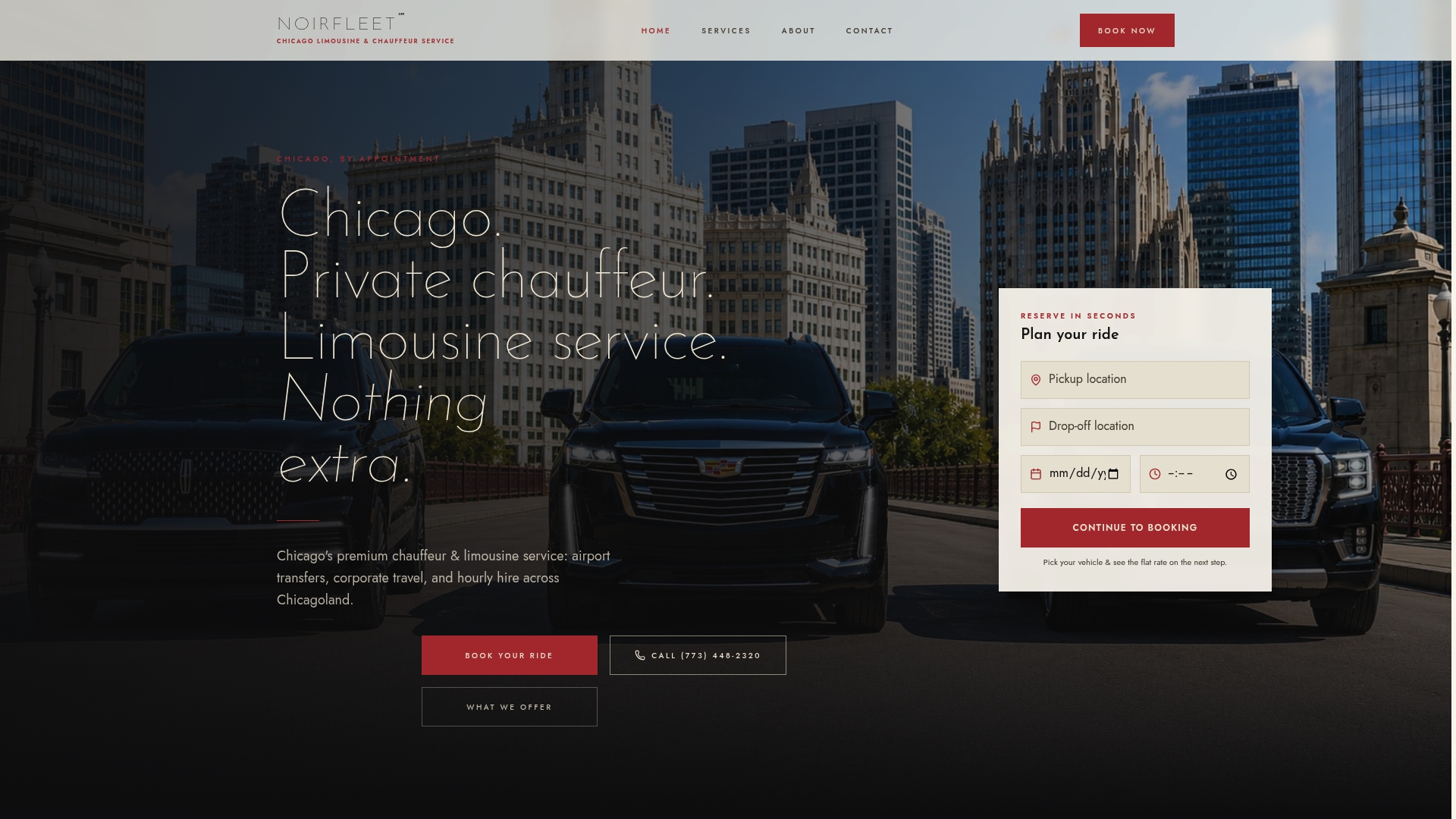
Every ride runs on a flat rate confirmed before you book, with no surge pricing and no last-minute surprises. Flight tracking covers O’Hare and Midway transfers, a dedicated coordinator handles weddings and events, and hourly hire gives you a chauffeur on call for as long as the day requires. Dispatch runs 24/7, including holidays, because travel emergencies don’t check a calendar first. Browse the full lineup of airport transfers, corporate travel, and event service, then book directly at Noirfleet when you’re ready to lock in a ride.
Sources
- Taxi drivers, shuttle drivers, and chauffeurs: Occupational Outlook Handbook | U.S. Bureau of Labor Statistics
- City of Chicago :: Chicago Public Chauffeur Licenses
- Commercial driver’s license | FMCSA
FAQ
Is a Chauffeur the Same as a Driver?
No. A driver focuses on safely operating a vehicle from one point to another, while a chauffeur adds itinerary management, luggage handling, flight tracking, and formal etiquette on top of the drive itself.
Do Chauffeurs Need a Special License?
Requirements vary by city, but many municipalities require background checks and approved training. Chicago requires a Public Chauffeur License with a two-year term and mandatory training before someone can legally operate a public passenger vehicle.
When Do You Need a CDL Instead of a Standard License?
A Commercial Driver’s License with a passenger endorsement is required under FMCSA rules when a vehicle carries 16 or more passengers, which typically applies to larger shuttles and party buses rather than sedans or standard SUVs.
How Much Does It Cost to Book Noirfleet?
Noirfleet’s pricing is flat and confirmed before every trip, with no surge charges added later. Current service details are available directly on the services page.
What Should I Ask Before Hiring a Chauffeur Service?
Ask for proof of licensing and insurance, confirm background checks are standard practice, and ask how flight delays or schedule changes are handled. A provider that can’t answer clearly or hedges on pricing is worth avoiding.