
Chicago Chauffeur Dress Code: Why a Pressed Suit Builds Trust
By NoirFleet Team ·
The standard chauffeur dress code is a conservative, well-tailored dark suit paired with a pressed white or light shirt, a conservative tie or scarf, and polished black shoes. Clients judge professionalism within seconds of seeing a driver, and formal attire signals competence before a word is exchanged. Exceptions apply by season, occasion, and assignment type, but the dark suit remains the baseline everywhere.
TL;DR:
- Operators usually expect chauffeurs to buy their suits, while companies may provide ties, name tags, or shirt allowances; handbooks and spot checks clarify expectations.
- For hot weather, choose breathable wool blends or a lightweight vest rather than short sleeves; cold and rain call for outerwear and slip resistant shoes.
- Airport pickups require a visible name badge or sign, corporate trips favor conservative styling, and weddings may require attire coordinated with the client.
- Keep scent light, nails clean, and hair and facial hair neat; check appearance and breath before each pickup, especially during long shifts.
- Choose wool blends, durable shoes, and two or three rotating suits; repeated sitting and daily wear can quickly make a single outfit look tired.
Table of Contents
- Standard chauffeur attire: suits, shirts, ties, and shoes
- Grooming and personal presentation standards
- Adapting the dress code for heat, cold, and rain
- Dress code variations by occasion
- How companies enforce dress standards and keep them consistent
- Hygiene and personal care beyond basic grooming
- Uniform quality standards worth investing in
- How we apply chauffeur dress standards at NoirFleet
- Book a chauffeur who meets this standard in Chicago
- FAQ
- Sources
Standard chauffeur attire: suits, shirts, ties, and shoes
A chauffeur’s working wardrobe starts with a suit in navy, charcoal, or black, cut close enough to look sharp but loose enough to allow quick movement in and out of a vehicle. Wool or wool-blend fabrics hold a press through a long shift better than cheaper synthetics, and a suit that bags at the knee after two hours undercuts the whole look.

Shirts should be white or a pale, solid color, always pressed, with a collar that sits cleanly under a tie. Research on attire and perception backs this up directly: formal attire increases perceived competence and trustworthiness, with uniforms functioning almost like a certificate of legitimacy that raises client confidence and cooperation.
A few wardrobe basics round out the look:
- A solid or subtly patterned tie in navy, black, or burgundy, or a neck scarf as a female-chauffeur alternative.
- Black leather shoes with a fresh polish and a sole that grips wet pavement.
- Dark dress socks that match the trousers, never white or patterned.
- A matching black belt, or none at all if the trousers use suspenders.
Government guidance on civilian chauffeur uniforms reflects this same template: the DOT’s published requirements list acceptable suit colors, shirt and tie combinations, and footwear as the baseline for professional drivers familiar with what LA drivers love.
Most operators expect chauffeurs to own their own suit, while the company supplies smaller standardizing pieces like a tie, name tag, or a shirt allowance.
Pro Tip: Keep a backup tie and a lint roller in the glovebox. A coffee spill or a stray pet hair shouldn’t end your shift’s polish.
Grooming and personal presentation standards
Grooming carries as much weight as the suit itself. A client who notices an unkempt hairline or strong cologne forms an impression just as fast as one who notices a wrinkled shirt.
- Keep hair trimmed and neat; facial hair, if worn, should be clean-lined and well-maintained, not patchy or overgrown.
- Trim and clean nails before every shift; hands are visible constantly when opening doors and handling luggage.
- Skip heavy cologne or perfume; many clients ride in enclosed spaces for long stretches and a strong scent becomes a complaint fast.
- Remove or minimize visible piercings beyond simple studs, and cover large visible tattoos with long sleeves when the uniform allows it.
- Do a sixty-second mirror check before every pickup: shirt tucked, tie straight, shoes dust-free, hands clean.
Adapting the dress code for heat, cold, and rain
Weather forces real adjustments, but the formal silhouette should hold. In cold months, a wool overcoat and leather gloves layer over the suit without breaking the look, and a scarf in a neutral tone works better than a bulky parka.
Hot weather tempts chauffeurs toward shortcuts, but short sleeves without a jacket read as unprofessional. A breathable wool-blend suit or a lightweight vest in place of a full jacket keeps the formal line intact while cutting the heat.
Rain calls for a waterproof trench coat or overcoat rather than a rain jacket in bright colors, and shoes benefit from a quick wipe and reapplied polish after exposure to wet streets. Non-slip soles matter year-round, especially on icy curbs or rain-slicked airport drop lanes, and a safe step matters more than a shiny one.

Dress code variations by occasion
Not every assignment calls for identical attire, though the baseline suit rarely disappears entirely.
- Airport transfers call for the full formal look plus a visible name badge or sign, since first impressions happen curbside under time pressure.
- Corporate travel pushes toward the most conservative end of the spectrum: solid dark suits, muted ties, and a shirt pressed without a single visible crease.
- Weddings and special events sometimes call for black-tie-adjacent dress, a tuxedo-style jacket or formal vest, coordinated in advance with the client’s own dress code for the day.
- Rep or staff-transport jobs occasionally allow business-casual exceptions, such as a blazer without a tie, but operators typically specify this in the job assignment rather than leaving it to guesswork.
The difference between a chauffeur and a general driver often shows up exactly here: chauffeurs train for these distinctions as part of executive service standards, while informal driving jobs rarely carry a dress protocol at all.
How companies enforce dress standards and keep them consistent
Operators rely on a mix of policy and spot verification to keep attire consistent across a fleet.
- Handbooks typically spell out who supplies the suit versus who supplies ties, name tags, or a seasonal allowance.
- Airport spot checks, customer feedback, and occasional unannounced “ghost ride” bookings catch lapses before they become a pattern.
- New hires sometimes get a short grace period before full uniform enforcement begins, reducing risk while they settle in.
Industry benchmarking on uniform policy confirms this pattern: operators commonly report that chauffeurs supply their own suits while the company handles ties, name tags, and modest allowances, with spot checks as the main enforcement tool. That mix matters because uniforms carry a real trade-off: they give a measurable boost to first impressions, but they also amplify blame when service goes wrong, which is exactly why upkeep and training carry so much weight alongside the suit itself.
Pro Tip: Keep a travel steamer or a wrinkle-release spray in the trunk. A five-minute touch-up before a pickup beats explaining a creased jacket to a corporate client.
Hygiene and personal care beyond basic grooming
Hand care and breath freshness matter more for chauffeurs than most professions, since both come up constantly during door-opening, luggage handling, and close conversation in a confined cabin. Hands should stay clean and moisturized, with nails trimmed short enough to avoid snagging on luggage handles or door panels.
Breath freshness deserves its own routine. Carrying mints or a travel toothbrush for long shifts avoids the buildup that coffee, lunch, or a long day can leave behind, especially during multi-stop corporate routes or extended hourly bookings. A quick check before each pickup, not just at the start of a shift, keeps this consistent across an eight or ten-hour day.
Skin and scalp care round out the picture. Light, unscented deodorant works better than heavy cologne in an enclosed vehicle, and a clean-shaven or well-trimmed look holds up better through a long shift than one that starts sharp and fades by evening. None of this is complicated, but it is the kind of detail that separates a chauffeur a client remembers positively from one they simply forget.
Uniform quality standards worth investing in
Durability matters as much as appearance for anyone wearing a suit five or six days a week. A wool or wool-blend suit in a mid-weight fabric holds its shape and press far longer than a cheap polyester blend, and it resists the shine that comes from repeated sitting and friction against car upholstery.
Quality dress shoes with a resoleable leather construction outlast cheaper synthetic alternatives by years, not months, and they take a polish better over time. A well-made shirt with reinforced collar stitching survives daily laundering without fraying at the point where the tie knot sits.
The research on uniforms and perception offers a practical argument for investing in quality pieces: a sharp uniform gives a real, if modest, boost to how clients judge a driver on first meeting, according to meta-analytic findings on organizational attire. That edge disappears quickly if the suit looks tired by the third wear, which is why chauffeurs who take the job seriously tend to rotate two or three suits rather than relying on one.
How we apply chauffeur dress standards at NoirFleet
Our chauffeurs are trained to executive service standards, and that training includes the same attire expectations covered above. Presentation is treated as part of the service itself, adjusted for weather and event type without ever dropping the formal baseline.
As Adam of NoirFleet puts it, a chauffeur’s suit is the first thing a client evaluates and the last thing we let slip.
— Adam
Book a chauffeur who meets this standard in Chicago
We staff every airport transfer, corporate trip, hourly booking, and special event with chauffeurs held to the standards in this guide, backed by flat-rate pricing with no surge, real-time flight tracking, and 24/7 dispatch.
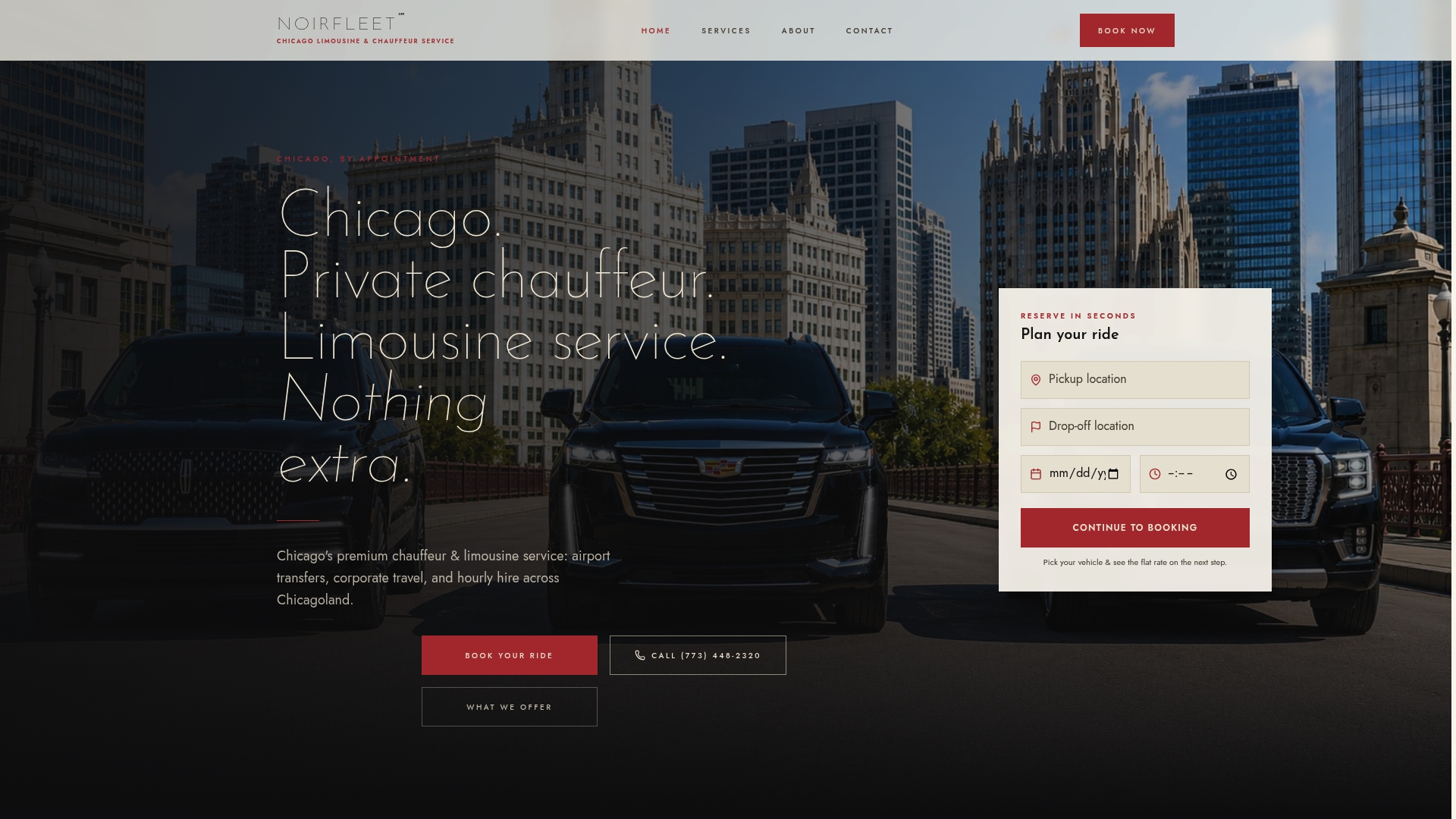
Browse our services or go straight to booking a ride at noirfleet.us.
FAQ
What uniform do chauffeurs wear?
Most chauffeurs wear a dark tailored suit, a pressed white or light shirt, a conservative tie, and polished black shoes. Some companies add a name badge or small branded pin as the only visible company-specific element.
What is the dress code for a driver?
General drivers typically have no formal dress code, while chauffeurs follow a structured one built around a dark suit and polished shoes. The distinction reflects the difference in training and service expectations between the two roles.
What do female chauffeurs wear?
Female chauffeurs generally wear the same dark suit silhouette as their male counterparts, often with a neck scarf in place of a tie. Pants or a tailored skirt suit both fit within standard expectations, as long as the shoes stay polished and the overall look stays conservative.
What is the difference between a chauffeur and a driver?
A chauffeur trains in executive service standards, including attire, etiquette, and client handling, while a general driver typically focuses only on getting from one point to another. This distinction shapes everything from how a ride is conducted to how the chauffeur dresses for it.
Sources
- PubMed: formal attire and perception (study summary)
- Uniformity: The effects of organizational attire on judgments and attributions
- Benchmark & best practices: uniform guidelines — Chauffeur Driven