Book 30–90 Days Ahead for Chicago Wine Tour Transportation
By NoirFleet Team ·
The safest, least stressful way to enjoy a U.S. wine-region tasting day is to hire a professional chauffeur or charter vehicle sized to your group, not to split people across rental cars. It keeps everyone together, removes the drinking-and-driving problem entirely, and cuts down on the logistics headaches that derail a good tasting day. Chicago readers planning a departure from the city have a local option in Noirfleet, which runs hourly hire and party bus service built for exactly this kind of multi-stop day.
TL;DR:
- Booking a vehicle that matches your group’s actual size and needs ensures a safer, more comfortable wine tour experience, especially for case purchases and privacy.
- Early reservation, ideally 30 to 90 days before peak weekends, is crucial to secure preferred wineries, avoid delays, and build sufficient travel buffers for rural roads.
- Verify provider credentials such as licensing, insurance, and driver experience beforehand, and ask about amenities like cooled storage and flexible day-of adjustments.
- Flat-rate pricing based on hours booked and vehicle size protects against unexpected costs, with timing aligned to winery reservation windows and tasting durations.
- Winging a wine trip by splitting groups into smaller cars often leads to safety risks and disrupted plans; booking a single appropriate vehicle is consistently more reliable.
Table of Contents
- Which Vehicle Fits Your Wine Tour Group?
- How Do You Choose the Right Vehicle for Your Group?
- What Should You Ask a Transportation Provider Before Booking?
- When Should You Book Transportation for a Wine Tour?
- What Safety and Licensing Credentials Should You Verify?
- How Noirfleet Plans a Chicago Wine-Tour Day
- How Does Booking a Wine Tour Transportation Service Actually Work?
- What Does Wine Tour Transportation Cost?
- How Do You Time Transportation Around Winery Hours?
- What Happens If Plans Change Mid-Tour?
- Why Planning-First Transportation Beats Winging It
- How to Book Noirfleet for a Chicago Wine Tour
- Sources
- FAQ
Which Vehicle Fits Your Wine Tour Group?
Vehicle choice comes down to headcount first, then how much space you need for bottles, luggage, and elbow room. Get this wrong and you either overpay for empty seats or cram people into a van that feels like a commute rather than a celebration.
- Sedan or SUV: Best for couples or groups of two to four who want a quieter ride and lower cost. Good for a single-winery lunch outing or a date-day tasting.
- Executive van or Sprinter: The sweet spot for six to twelve people. These offer real storage for case purchases and enough social space that conversation doesn’t require shouting.
- Party bus or luxury coach: Built for bigger celebrations, bachelorette parties, birthdays, corporate outings, it keeps the whole group together but runs louder and less intimate than a van.
- Mini coach or charter bus: For very large groups or company events where you need multiple pickup points and a coordinated drop-off schedule.
Whatever size you land on, prioritize a few amenities that matter more than people expect. Climate control protects wine from heat damage on hot afternoons, since operators routinely warn that bottles left in a hot vehicle can “cook” during a long tasting day. A restroom matters on full-day trips through rural wine country where stops are sparse. Charging ports and enough seat width for a full day of sitting round out the list.
How Do You Choose the Right Vehicle for Your Group?
Run through a short checklist before you call anyone:
- Headcount and mobility needs. Count actual attendees, not the invite list, and flag anyone who needs easier vehicle access.
- Expected purchases. A group that plans to buy cases needs a vehicle with real cargo space, not just trunk scraps.
- Luggage and privacy. Airport arrivals add suitcases to the mix; a private event adds a preference for a closed, quieter cabin.
- Noise and music preferences. A party bus fits a bachelorette crowd; it does not fit a corporate client dinner.
One mistake groups make constantly: splitting eight or ten people across two or three smaller cars instead of booking one van. It seems cheaper upfront, but it fragments the group, multiplies the chance someone gets left behind at a winery, and removes the safety benefit of having everyone under one driver’s watch. A single vehicle matched to your real headcount beats a caravan of smaller ones almost every time.
Price should not be the only filter. Verified safety credentials and a chauffeur’s local route experience add up to more tasting time and fewer delays than choosing whoever quotes the lowest number.
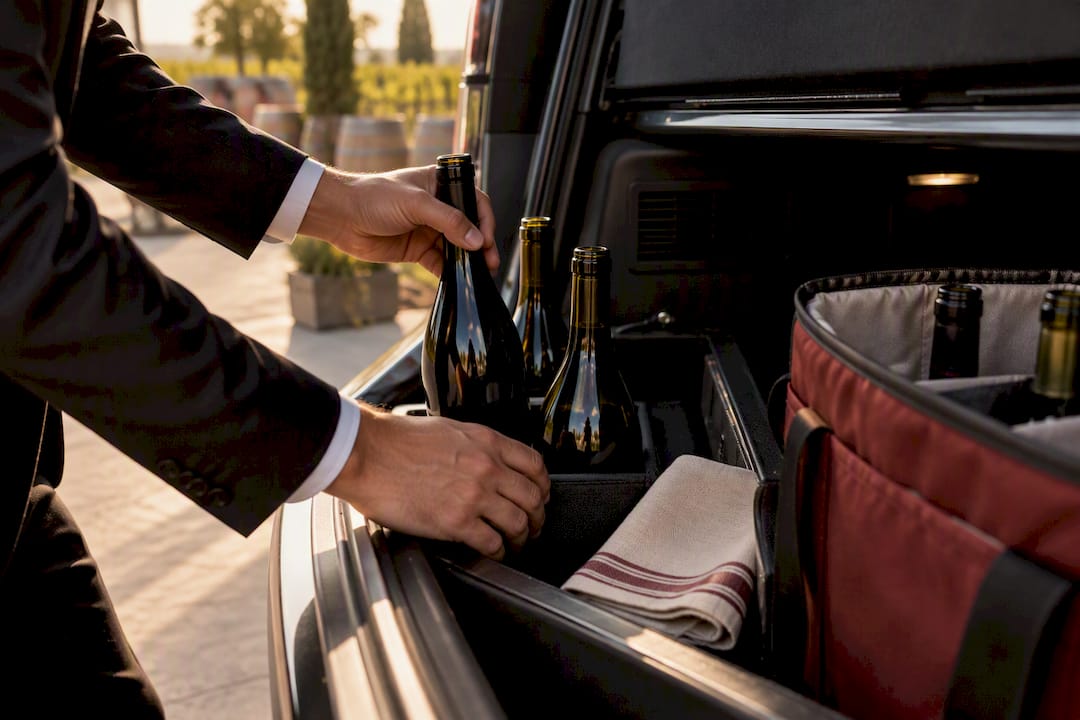
Pro Tip: Ask upfront whether the vehicle has secure, cooled storage for bottles and whether the chauffeur will help load and unload purchases at each stop. Some drivers will; plenty won’t unless you ask.
What Should You Ask a Transportation Provider Before Booking?
A few pointed questions before you hand over a deposit will save you from day-of surprises:
- Can you show proof of commercial licensing and current liability insurance, and how do I verify it independently?
- What background checks and training does the driver go through, and has that driver worked in wine-region routes before?
- Exactly what does the flat rate cover: total hours, mileage, wait time at each winery, and extra stops beyond the original plan?
- How are wine purchases stored and kept cool, and is there a restroom or comfort stop plan for a full-day trip?
- Who handles winery reservation coordination, and who is my point of contact on the day if plans shift?
There’s a real distinction worth clarifying here too: some operators provide transportation only, while others build in a knowledgeable guide who narrates the region and steers your itinerary. Decide which one you actually want before you book, because the price and the experience differ.
When Should You Book Transportation for a Wine Tour?
Timing mistakes ruin more wine days than bad weather does. Book both your transportation and your winery reservations early, and follow a sensible order of operations rather than winging it.
- Lock the headliner winery first. Planning guides recommend booking your must-visit winery and lunch reservation before anything else, then working backward to hotel and transport.
- Reserve transport 30 to 90 days out for peak weekends. Group transportation guidance for popular regions like Napa recommends contacting providers well ahead of harvest season and weekend dates, since vehicles book up fast in September and October.
- Cap your day at two to three wineries. A sensible pace runs six to eight hours total, with two to three tastings plus a lunch stop, which avoids palate fatigue and rushed pours.
- Build in travel buffers. Rural roads and harvest-season traffic run slower than GPS estimates suggest, so pad 20 to 30 minutes between stops.
- Coordinate flight arrivals with pickup. If you’re flying in for the trip, confirm your provider offers flight tracking so a delayed flight doesn’t strand your group at baggage claim.
What Safety and Licensing Credentials Should You Verify?
Before you hand over a deposit, confirm the provider is a legitimate commercial operator, not just someone with a nice van and a website.
- USDOT or state carrier number. Group transport planning guidance flags USDOT and state registration as the baseline check before booking any larger vehicle.
- Current commercial liability insurance, distinct from personal auto coverage.
- Driver background checks and confirmation of state or city licensing where it applies.
- Vehicle inspection records, especially for vans, buses, and coaches carrying larger groups.
Red flags are easy to spot once you’re looking: vague or evasive answers about insurance, refusal to provide a carrier number, or pressure to book without paperwork. Treat any of those as a reason to walk away, no matter how good the quote sounds.
One of the most consistent recommendations in wine-trip planning guides is capping visits at roughly three wineries per day and leaning on a designated driver or hired transport rather than letting anyone in the group get behind the wheel after tastings.
How Noirfleet Plans a Chicago Wine-Tour Day
A wine day runs smoothly when the transportation plan gets built around the tastings, not the other way around. A reputable chauffeur service approaches Chicago-area wine trips with flat-rate pricing confirmed before pickup, so there’s no surprise math at the end of the day, and 24/7 dispatch means a late-running tasting or a last-minute schedule change doesn’t leave anyone stranded. Chauffeurs are background-checked, insured, and City of Chicago licensed, and a dedicated coordinator handles the details that usually cause stress: confirming pickup windows, working out secure storage for wine purchases, and building in extra time for rural roads outside the city.
A wine day should feel unhurried from the first pickup to the last drop-off. That only happens when the transportation plan accounts for real road conditions, real tasting-room timing, and a group that stays together the whole way.
Chicago-area readers heading out to Midwest wine country, or flying elsewhere and needing airport pickup first, can request hourly hire or a party bus sized to the group through Noirfleet’s service lineup, with real-time flight tracking built in for anyone landing before the trip starts.
How Does Booking a Wine Tour Transportation Service Actually Work?
Booking typically starts with a request: group size, pickup location, the wineries or region you want to visit, and roughly how many hours you’ll need. A reputable provider confirms the itinerary back to you, including estimated drive times between stops, before locking in a flat rate. That flat-rate confirmation matters because it’s what protects you from the classic surprise of a driver tacking on extra charges for wait time or additional stops mid-trip.
Once the itinerary is set, most providers ask you to confirm pickup details 24 to 48 hours out: exact address, contact phone number, and any special requests like bottle storage or a mid-day lunch stop. If you’re flying into town for the trip, flight tracking lets the provider adjust pickup time automatically if your flight runs early or late, so you’re not calling dispatch from the jet bridge trying to explain a delay.
Online booking has mostly replaced phone-only reservations for this reason: you can submit your itinerary, get a flat-rate quote, and confirm pickup details without playing phone tag. A dedicated coordinator, where the provider offers one, becomes useful the moment your plans shift, since they can adjust winery stops or timing without you having to renegotiate the whole booking. The best providers treat the itinerary as a living document that flexes with your day, not a fixed script you’re locked into the moment you pay.
What Does Wine Tour Transportation Cost?
Pricing scales with vehicle size and hours booked, not distance traveled, which is why flat-rate structures make more sense for wine days than mileage-based pricing. A sedan or SUV for a half-day trip with two to four people sits at the lower end of the range. An executive van or Sprinter for six to twelve people, booked for a full six to eight hour day, runs higher because of the added capacity and driver hours. Party buses and mini coaches for larger groups or full-day corporate outings land at the top of the range, reflecting both vehicle size and the extra planning that goes into multi-stop, multi-hour bookings.
The variable that actually swings your final cost most is total hours booked, not which winery you visit. A rushed four-hour outing costs less than a relaxed eight-hour day, so decide your pacing before you request quotes. Flat-rate pricing, confirmed before the day starts, protects you from the two most common cost surprises: extra charges for wait time at wineries and add-on fees for unplanned stops. Ask every provider you’re comparing to quote the same scope: same hours, same stop count, same group size, so you’re actually comparing apples to apples rather than a bare-bones quote against a fully loaded one.
How Do You Time Transportation Around Winery Hours?
Most wineries pour tastings within a fairly tight window, often late morning through mid-afternoon, and many now require reservations for specific time slots rather than accepting walk-ins. That means your transportation schedule needs to work backward from those confirmed slots, not the other way around.
Start by locking your first winery’s reservation time, then calculate backward including drive time and a buffer for parking. Rural wine roads often run slower than map estimates suggest, especially during harvest season when tasting-room traffic peaks. Build at least 15 to 20 minutes of slack into every leg of the drive.
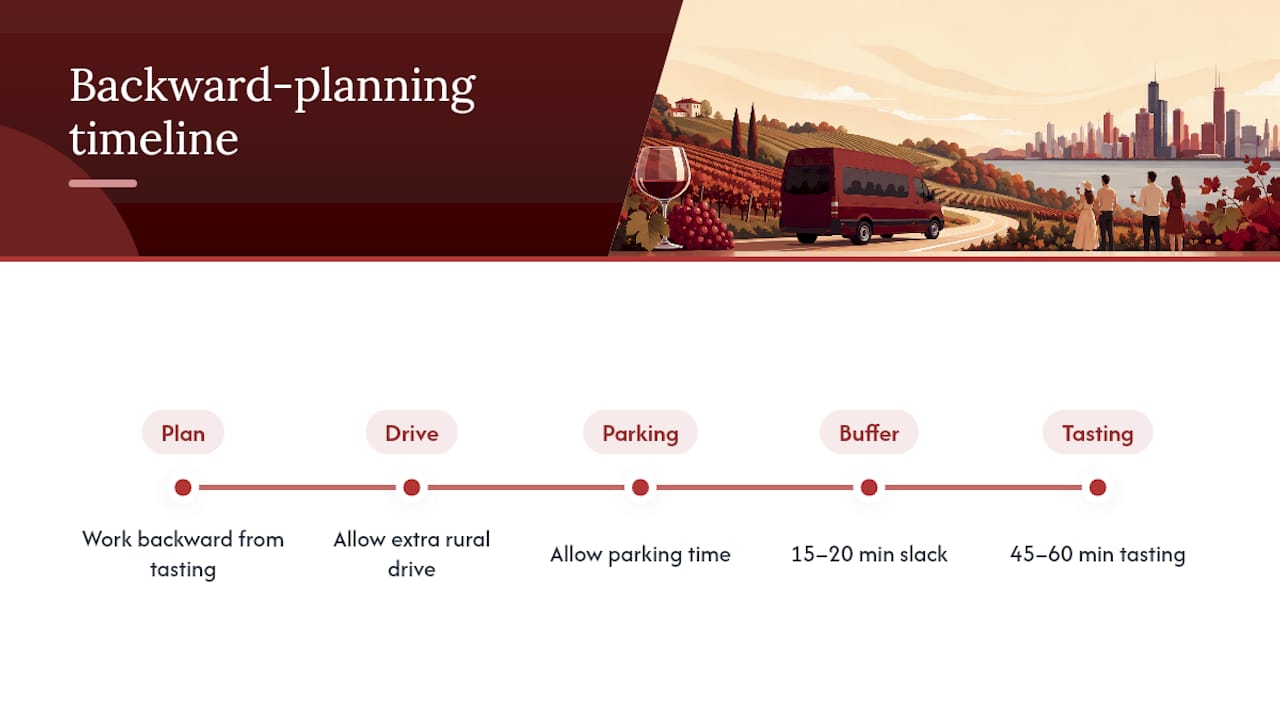
Tasting durations typically run 45 minutes to an hour per stop, longer if you add a food pairing or cellar tour. Trying to cram four or five stops into a day usually backfires: you either rush through pours or blow past your pickup window at the next winery. Coordinate lunch reservations into the same timeline rather than treating them as a flexible add-on, since a 1 p.m. lunch reservation with no buffer can collapse an otherwise well-planned afternoon if the prior tasting runs long.
What Happens If Plans Change Mid-Tour?
Wine days rarely go exactly as scripted. A winery runs a tasting long, a group member wants to add a stop, or weather forces a route change. The difference between a minor hiccup and a ruined afternoon usually comes down to whether your transportation provider offers real-time flexibility or locks you into a rigid schedule.
Ask before you book how the provider handles day-of changes: is there a live dispatch line, or do you have to call an office that closes at 5 p.m.? Providers with 24/7 dispatch and a dedicated day-of contact can usually reroute a driver, extend a booking, or adjust pickup timing without derailing the rest of the trip. That responsiveness matters more on a wine tour than almost any other kind of trip, since tasting rooms rarely run exactly on schedule.
For genuine emergencies, confirm the provider’s cancellation and modification policy before you need it. A clear policy, stated upfront, tells you whether a sudden illness or a weather delay costs you the whole booking or just triggers a reasonable adjustment. Keep the coordinator’s or dispatcher’s direct contact info handy for the day itself, not buried in a confirmation email you’d have to dig up under pressure.
Why Planning-First Transportation Beats Winging It
Most wine tour advice online focuses on which winery to visit or which vintage to try. That’s the easy part. The harder, less discussed problem is that transportation is usually the last thing people book and the first thing that fails when it’s an afterthought.
The conventional wisdom treats transportation as a commodity: any van will do, book it a few days out, done. That’s backwards. The research on this is consistent: group planning guidance recommends booking transport 30 to 90 days ahead for busy wine regions, well before most people even think to call. Wait too long and you’re choosing from whoever has availability left, not the provider best suited to your group.
The thing readers should prioritize first isn’t the vehicle type. It’s verifying the provider’s licensing and insurance before comparing prices at all. A cheap quote from an unverified operator isn’t a bargain, it’s a liability. Once safety is confirmed, matching vehicle size to group size and booking early enough to secure both the winery slots and the transport window is what actually determines whether the day feels relaxed or rushed.
— Adam
How to Book Noirfleet for a Chicago Wine Tour
Hiring a professional chauffeur service is a practical alternative to piecing together a wine day yourself: flat-rate pricing confirmed upfront, 24/7 dispatch, background-checked chauffeurs, and a dedicated coordinator who handles the details most groups forget until it’s too late.
For Chicago-area readers planning a departure to Midwest wine country or a special event that calls for a full group vehicle, the process is straightforward. Check availability for your date and group size, confirm your pickup location along with any bottle-storage or luggage needs, and lock in the flat rate before the day of the trip. Groups running six to twelve people typically fit well with hourly hire, while larger celebrations or corporate outings may call for the luxury party bus. If your trip starts with a flight into O’Hare or Midway, flight tracking keeps pickup synced to your actual arrival time, not the scheduled one.
Ready to lock in your date? Book a ride with Noirfleet and get your flat rate confirmed before you finalize your winery reservations.
Sources
For readers planning a longer trip, WineJoys’ winery road trip guide covers pacing and reservation order for major U.S. wine regions. The California Wine Tours group transportation guide walks through licensing verification and lead times for larger bookings. For clarity on what a “wine tour” booking actually includes, Toast Tours’ breakdown of transportation versus guided tours is worth a read before you commit to either.
- The Ultimate U.S. Winery Road Trip Guide · WineJoys
- Group Transportation Planning Guide | California Wine Tours
- Wine Tour Transportation Planning - Toast Tours
FAQ
What Is the Best Wine Tour in the U.S.?
There’s no single best wine tour since it depends on region, group size, and season, but Napa Valley, Sonoma, and Oregon’s Willamette Valley consistently rank among the most visited. The right choice comes down to matching your group’s pace and interests to a region, then booking transportation and tastings well in advance once you’ve picked one.
How Much Does the Wine Train Cost?
Current wine train pricing varies by route, seat class, and season, and specific rates aren’t listed in this guide. Check the operator’s official site directly for current fares, since wine train tickets are priced separately from private chauffeur or charter vehicle bookings.
Are There Wine Trains in the USA?
Yes, several U.S. wine regions operate scenic wine trains, including the well-known Napa Valley Wine Train. These run on fixed schedules and routes, which makes them a different option from a private chauffeur or charter vehicle that adapts to your own itinerary and winery choices.
Which State in the U.S. Is Best for Wineries?
California leads in sheer winery volume and name recognition, especially Napa and Sonoma, but Oregon, Washington, Virginia, and New York all have strong, growing wine regions worth a dedicated trip. The better question is which region fits your travel time and taste preferences, since limiting a day to two or three wineries matters more than which state you pick.
Does Noirfleet Offer Wine Tour Transportation in Chicago?
Yes, Noirfleet supports Chicago-area wine day trips through its hourly hire and luxury party bus options, both bookable with flat-rate pricing confirmed before pickup. Groups can request a dedicated coordinator to help plan multi-stop itineraries and bottle storage needs through Noirfleet’s service page.